
Dr. Micah Morton Featured on Insight Myanmar Podcast Discussing His New Book Enchanted Modernities: Ancestral Vitalizations in the Upper Mekong (2025)
Spring Break Road Trip Story!
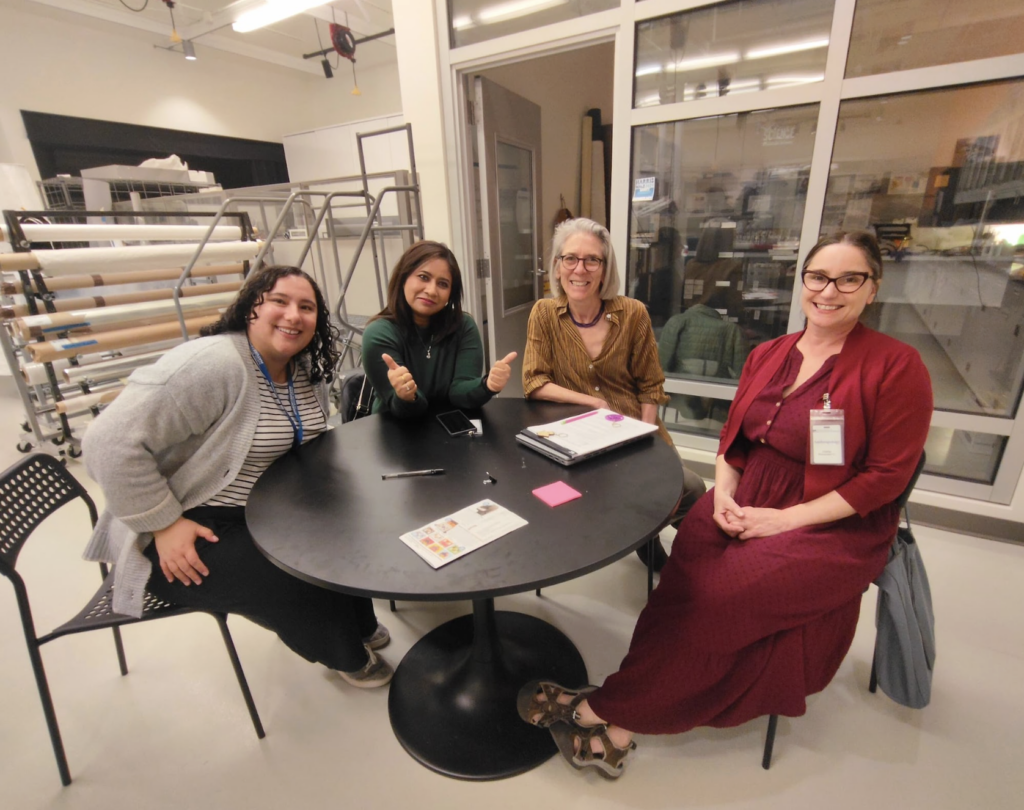
This Spring Break, Wan Juliana Emeih Wahed, a Fulbright Visiting Scholar from Universiti Teknologi MARA (UiTM) Sarawak, Malaysia embarked on an inspiring research journey to the American Southwest together with her NIU supervisor, Rebecca Houze. The memorable trip combined academic research, cultural immersion, and scenic adventure.
Dr. Wahed is currently at Northern Illinois University conducting her study titled “A Comparative Study of North American Navajo and Iban Textile Design Motifs.”
Diné textiles are admired for their rich cultural history and for the technical skill and artistry of their makers, which survives despite a complex legacy of exploitation and violence. Historically woven as wearing blankets and belted dresses from the wool of sheep introduced by Spanish settlers, they are also produced as fine tapestries with complex geometric patterns and pictorial compositions in a range of colors. While the striking “Two Grey Hills” style, popularized by Southwestern traders in the late nineteenth century, features naturally cream, grey, black, and brown wool, others are known for their deep red hue and contrasting black and indigo motifs produced with natural dyes, or for their dazzling displays of brightly colored commercial “Germantown” yarns, imported from Germantown, Pennsylvania in the late 1800s.
The journey began in Denver, the “Mile High City.” After arriving safely and picking up a rental car, the team headed to their Airbnb before starting a series of research appointments with museum curators and textile experts. Their first stop was the University of Colorado Museum of Natural History, where they met with Anthropology Collections Manager and NAGPRA Coordinator Elena Lompe and Dr. William Taylor, Assistant Professor and Curator of Archaeology. The following day, they visited the Denver Museum of Nature & Science, meeting Anthropology Collections Manager and NAGPRA Coordinator Angela Rueda, Research Assistant Dr. Emmy Dawson, and objects conservator Casey Mallinckrodt. Over ten Diné textiles were closely examined, with three in-depth interviews conducted, essential for understanding the techniques, materials, and design motifs.
In the evening, the team had the privilege of meeting Lynda Teller Pete, a renowned Diné master weaver. Her stories and insights flowed generously, offering a glimpse into the cultural and artistic context behind each textile piece.
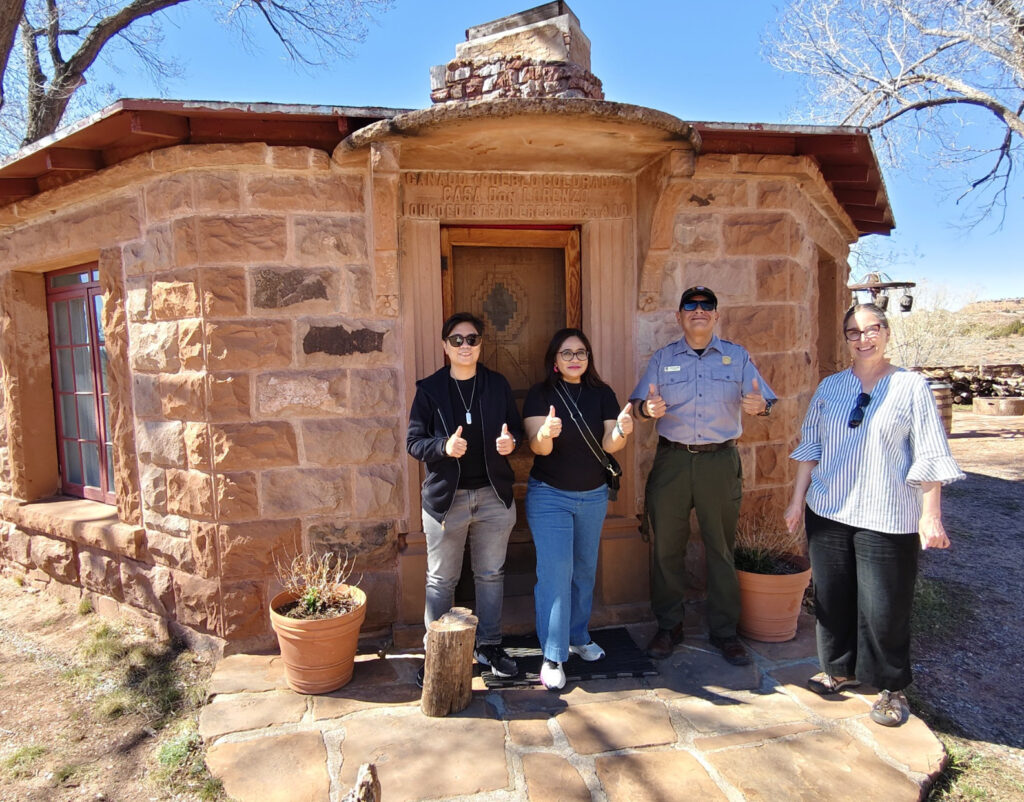
The next leg of the journey included a scenic seven-hour drive to Santa Fe, along the dramatic Sangre de Cristo Mountains. In Santa Fe, they visited the Wheelwright Museum of the American Indian, meeting curator Dr. Hadley Jensen, and explored the collections. Later, the team went to the School for Advanced Research Indian Arts Research Center (IARC), meeting Education Manager Paloma Lopez
No visit to Santa Fe would be complete without exploring the lively Santa Fe Plaza, with its vibrant streets, colorful shops, and local culture, a sensory experience that brought the Southwestern atmosphere to life. We met with artists from Santo Domingo Pueblo and other nearby communities, whose families have gathered for for several generations at the Palace of the Governors to sell finely crafted silver jewelry.
The journey continued with visits to Ganado, Arizona on the Navajo Nation and the historic Hubbell Trading Post National Historic Site, concluding at the Heard Museum in Phoenix, internationally recognized for its Native American art exhibitions.
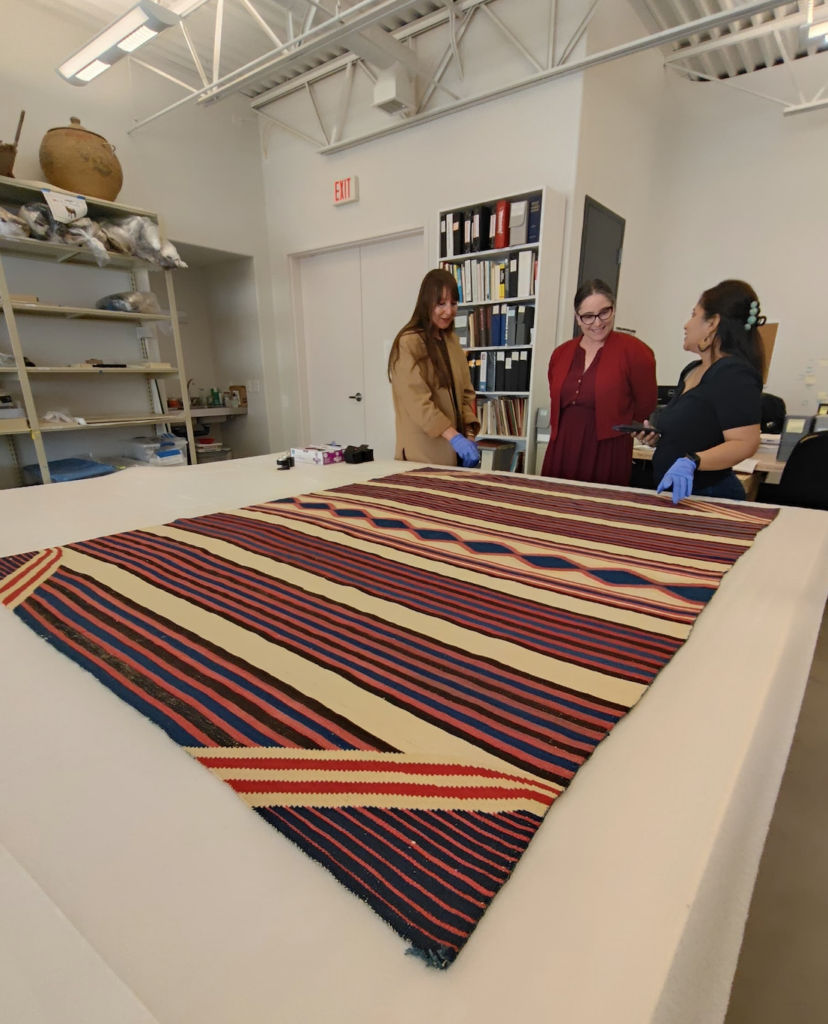
The trip was not just about appointments and observations; it was an immersive collaborative research experience. Dr. Wahed and Prof. Houze engaged with museum professionals, educators, and Indigenous knowledge holders, witnessing firsthand how Diné weaving traditions are preserved and practiced. Returning to Chicago with detailed observations, interviews, and memories, the journey marked an important milestone in their comparative study of Navajo and Iban textile motifs—demonstrating how research is enriched through teamwork, real-world encounters, and cultural immersion.
Highlight Quote:
“Together, we were able to engage with master weavers and museum experts, seeing firsthand the living traditions behind each motif, insights that no book or photograph could fully capture.”
– Dr. Wan Juliana Emeih Wahed & Prof. Rebecca Houze
______________________________________________________________
CSEAS Faculty Associate Scot Schraufnagel receives Excellence in Undergraduate Teaching Award
Congratulations to Scot Schraufnagel, professor in NIU’s Department of Political Science, on winning the 2026 Excellence in Undergraduate Teaching Award.
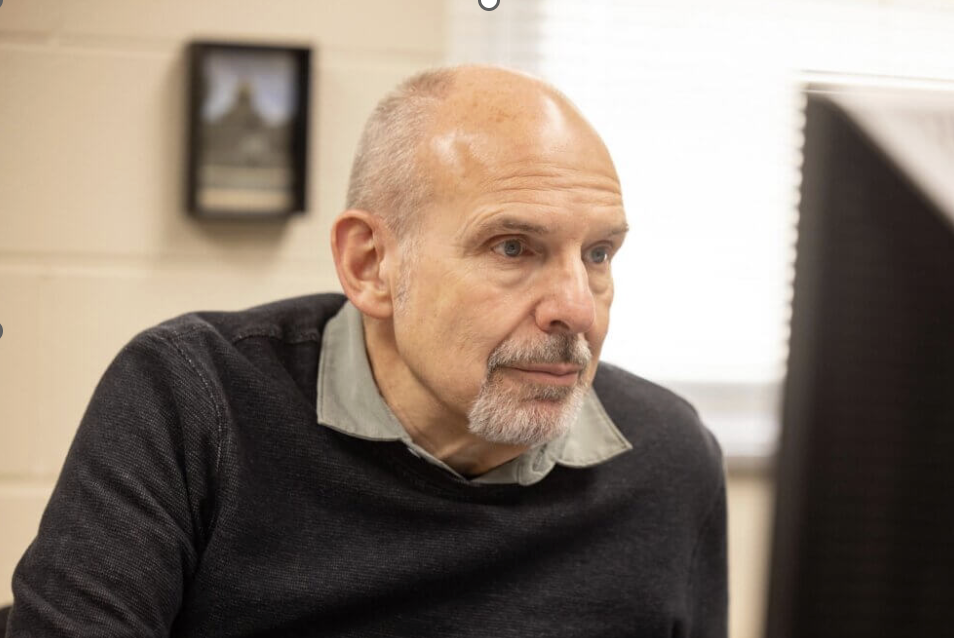
Scot Schraufnagel
Schraufnagel (“Schrauf”) teaches American government, political analysis, and research methods, using real-world examples and his own research to help students connect theory to current political issues. Known for being both demanding and highly supportive, he emphasizes study skills, research training, and exam preparation while fostering strong student engagement with political science.
He plays a key role in developing online courses and encourages faculty collaboration on digital learning. He also actively involves undergraduates in original research and promotes extracurricular academic opportunities.
A strong advocate for mentorship and career development, Schraufnagel regularly brings NIU alumni into his classes and connects students with mentors, leading to internships and career opportunities. Outside the classroom, he helped reboot the Model Illinois Government program, where NIU teams have since earned multiple awards.
Students consistently describe him as approachable and transformative, noting his dedication to office hours, personal guidance, and long-term support that has shaped their academic and professional paths. He will be honored at the 2026 Faculty Awards Ceremony on April 16 in Altgeld Hall.
